
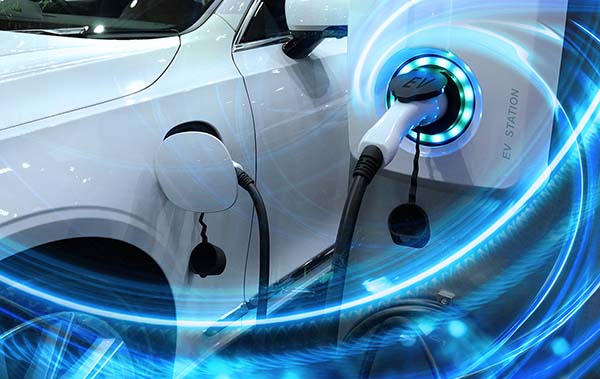
The very rapid growth of electric vehicles (EVs) has created an equally urgent demand for faster, more reliable, and energy-efficient charging systems. Whether powering passenger vehicles, commercial fleets, or public charging stations, modern charging infrastructure depends on advanced power electronics to deliver electricity safely and efficiently.
At the heart of these systems are SiC Schottky Diodes, a breakthrough in power semiconductor technology that is transforming the performance of EV charging semiconductors. Compared to conventional silicon-based devices, Silicon Carbide (SiC) Schottky diodes offer significantly lower power losses, faster switching speeds, and the ability to operate at higher temperatures. These characteristics make them an essential component in today’s fast EV chargers and tomorrow’s ultra-high-power charging networks.
Quest Semi develops high-voltage Silicon Carbide power devices designed for demanding applications, including electric vehicle charging, renewable energy systems, industrial power conversion, and high-voltage infrastructure. The company currently manufactures SiC Schottky Diodes ranging from 650V to 4500V, supporting next-generation power electronics.
Why EV Charging Efficiency Matters
As EV adoption accelerates worldwide, charging infrastructure must become more powerful without dramatically increasing energy consumption or operating costs.
Every power conversion stage inside an EV charger creates some energy loss. Traditional silicon diodes generate heat during switching and conduction, reducing overall efficiency and requiring larger cooling systems.
For operators of high-power charging stations, even a small improvement in efficiency translates into:
- Lower electricity costs
- Reduced cooling requirements
- Increased charger reliability
- Higher charging throughput
- Lower total cost of ownership
This is why manufacturers are increasingly adopting Silicon Carbide technology.
What Are SiC Schottky Diodes?
SiC Schottky Diodes are power semiconductor devices manufactured using Silicon Carbide rather than conventional silicon.
Because Silicon Carbide is a wide-bandgap semiconductor, it possesses electrical properties that allow it to operate under much higher voltages, temperatures, and switching frequencies than traditional semiconductor materials.
Key advantages include:
- Extremely fast switching performance
- Virtually zero reverse recovery losses
- High voltage capability
- Low forward voltage drop
- Excellent thermal conductivity
- High reliability under demanding operating conditions
These characteristics make SiC devices ideal for modern EV charging semiconductors, where efficiency and reliability directly impact charger performance.
Faster Charging Through Higher Switching Speeds
One of the biggest advantages of SiC Schottky Diodes is their ability to switch significantly faster than conventional silicon diodes.
Fast switching enables:
- Higher-frequency power conversion
- Smaller magnetic components
- Reduced energy losses
- Improved power density
For fast EV chargers, this means more electrical energy reaches the vehicle battery rather than being wasted as heat.
Higher switching frequencies also enable more compact charger designs while maintaining or increasing output power. As public charging stations continue moving toward 150 kW, 350 kW and even higher charging capacities, SiC technology becomes increasingly valuable for maintaining high efficiency. Research consistently identifies SiC devices as a preferred choice for high-power DC fast charging because of their low switching losses and high-voltage performance.
Lower Energy Losses Mean Greater Efficiency
Energy efficiency is one of the primary reasons Silicon Carbide has become a leading material for power electronics.
Traditional silicon diodes experience reverse recovery losses whenever they switch between conducting and blocking states. These losses generate unwanted heat and reduce overall system efficiency.
SiC Schottky Diodes virtually eliminate reverse recovery current, dramatically reducing switching losses.
The benefits include:
- Higher overall charger efficiency
- Less wasted electrical energy
- Reduced heat generation
- Lower cooling costs
- Increased system lifespan
Even efficiency improvements of just one or two percentage points can produce substantial operational savings over the lifetime of commercial charging infrastructure.
Higher Operating Temperatures Improve Reliability
Heat is one of the biggest challenges facing power electronics.
As charging power increases, semiconductor junction temperatures rise rapidly. Conventional silicon devices often require extensive cooling systems to remain within safe operating limits.
Silicon Carbide naturally withstands much higher operating temperatures while maintaining excellent electrical performance.
Higher temperature capability allows engineers to:
- Reduce cooling system complexity
- Increase power density
- Improve long-term reliability
- Extend service intervals
- Design smaller charging systems
This improved thermal performance is particularly important for outdoor charging stations operating in harsh climates where ambient temperatures can already be extremely high.
Quest Semi’s high-voltage SiC devices are specifically designed to provide excellent thermal performance alongside high switching efficiency for demanding industrial and automotive applications.
Enabling More Compact Fast EV Chargers
Consumers increasingly expect charging experiences comparable to refuelling a conventional vehicle.
To achieve this, manufacturers continue increasing charger power output.
Higher power normally requires larger cooling systems and heavier passive components. However, SiC technology changes this equation.
Because SiC Schottky Diodes operate efficiently at higher frequencies and temperatures, engineers can reduce the size of transformers, inductors, and heat sinks.
The result is:
- Smaller charger cabinets
- Lower installation costs
- Easier maintenance
- Higher power density
- Greater installation flexibility
These improvements help make high-power charging more practical in urban environments where installation space is limited.
Supporting the Future of EV Infrastructure
The global EV ecosystem is evolving rapidly.
Future charging infrastructure will require:
- Ultra-fast DC charging
- Bidirectional charging (V2G)
- Renewable energy integration
- Smart grid compatibility
- High-power commercial fleet charging
Each of these technologies depends on efficient power conversion.
As charging stations become more intelligent and capable of handling greater power levels, advanced EV charging semiconductors will become increasingly important.
Silicon Carbide provides the electrical performance necessary to support these next-generation systems while helping operators reduce energy consumption and operating costs.
Wide-bandgap semiconductors such as SiC are expected to remain a key enabling technology for future high-power charging architectures because of their superior voltage handling, switching efficiency, and thermal characteristics.
Why Choose Quest Semi?
Quest Semi is committed to advancing high-performance Silicon Carbide technologies that support the global transition toward cleaner, more efficient energy systems.
Its product portfolio includes:
- High-voltage SiC Schottky Diodes
- SiC wafers and bare die
- High-voltage SiC MOSFETs
- Custom semiconductor solutions
With operating voltage ranges from 650V to 4500V and expertise across electric vehicle charging, renewable energy, industrial power conversion, and high-voltage infrastructure, Quest Semi provides advanced semiconductor solutions engineered for next-generation power electronics.
Conclusion
As electric vehicle adoption continues to accelerate, charger efficiency has become just as important as charging speed.
SiC Schottky Diodes are helping transform fast EV chargers by delivering lower switching losses, higher operating temperatures, greater reliability, and improved power density. These advantages enable more efficient charging stations while reducing operating costs and supporting future EV infrastructure.
For manufacturers seeking advanced EV charging semiconductors, Silicon Carbide technology represents one of the most significant innovations in modern power electronics. Quest Semi continues to lead this evolution by developing high-performance SiC solutions that help build faster, more efficient, and more sustainable charging systems for the future.