
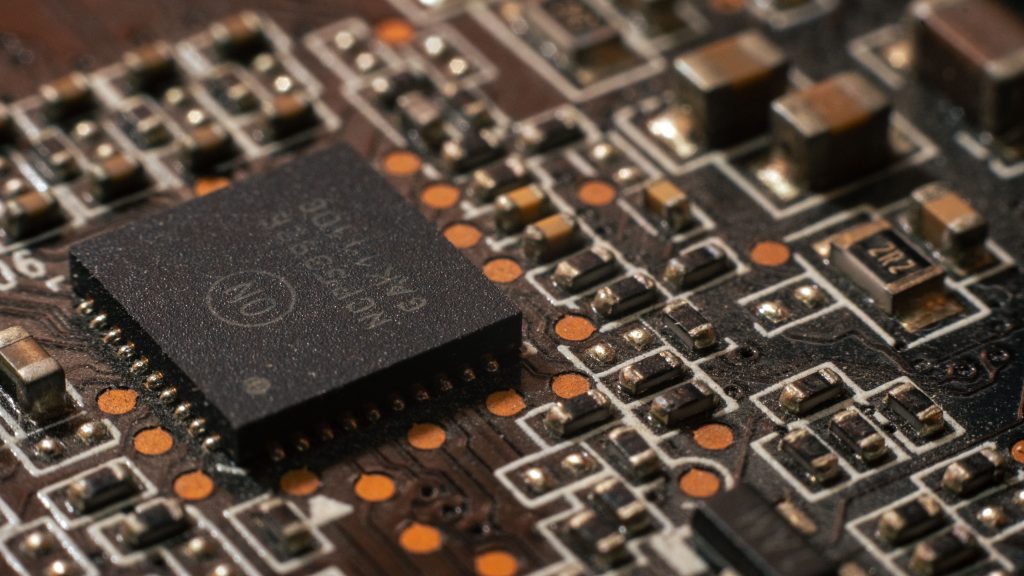
As industries demand higher efficiency, greater power density, and more reliable electronic systems, Silicon Carbide (SiC) power technology is becoming increasingly important. From electric vehicles and renewable energy systems to industrial equipment and high-voltage power supplies, SiC devices offer significant advantages over conventional silicon components.
However, engineers, purchasing teams, and businesses evaluating this technology often have questions about how Silicon Carbide works, where it should be used, and whether the potential efficiency improvements justify the investment.
This Silicon Carbide FAQ answers some of the most common questions about SiC power devices, including SiC Schottky Diodes, MOSFETs, voltage ratings, applications, reliability, and energy savings.
What Is Silicon Carbide?
Silicon Carbide, very commonly abbreviated as SiC, is a semiconductor material made from silicon and carbon. While conventional semiconductor components are predominantly manufactured using silicon, Silicon Carbide has material characteristics that make it particularly well suited to demanding power electronics applications.
SiC is known as a wide-bandgap semiconductor. Its wide bandgap enables components to operate effectively under conditions involving higher voltages, higher temperatures, and higher switching frequencies.
These characteristics have made SiC devices increasingly attractive for engineers designing systems where efficiency, size, weight, thermal management, and power density are important considerations.
Power semiconductor products based on Silicon Carbide include Schottky barrier diodes and MOSFETs, which can be incorporated into power conversion and control systems across numerous industries.
Why Is SiC Better Than Silicon?
Silicon remains an extremely important semiconductor material, and the best technology depends on the application. However, Silicon Carbide offers several advantages in demanding power electronics.
Compared with traditional silicon-based power components, SiC technology can enable:
- Higher switching frequencies
- Lower switching losses
- Operation at higher temperatures
- Higher breakdown electric fields
- Improved power density
- Smaller passive components in some system designs
- Reduced cooling requirements in appropriate applications
- Greater overall system efficiency
The ability to reduce power losses is particularly important. Whenever electrical energy is converted—for example, from DC to AC or from one voltage level to another—some energy can be lost as heat.
Reducing these losses can improve system efficiency while potentially decreasing thermal-management requirements. This combination is one reason SiC technology is gaining attention in electric vehicles, renewable energy, industrial power supplies, and other high-performance applications.
What Are SiC Devices Used For?
SiC devices are primarily used in power electronics applications involving the conversion, switching, or management of electrical power.
Typical applications can include electric vehicle powertrains and charging equipment, solar inverters, energy storage systems, industrial motor drives, power supplies, uninterruptible power supplies, telecommunications infrastructure, data center equipment, and other high-voltage power conversion systems.
The exact benefits depend on system architecture and operating conditions. However, designers frequently consider SiC when conventional silicon solutions create limitations related to switching losses, temperature, size, weight, or efficiency.
What Industries Benefit Most From Silicon Carbide Technology?
A growing number of industries can benefit from Silicon Carbide power semiconductors.
The automotive industry is one of the most prominent examples. SiC components can be used in electric vehicle traction inverters, onboard chargers, DC-DC converters, and charging infrastructure.
The renewable energy sector can use SiC technology in solar inverters and energy storage systems where efficient power conversion is critical.
In industrial applications, SiC power components can support motor drives, automation equipment, welding systems, high-power supplies, and other demanding electrical systems.
Other potential sectors include aerospace, telecommunications, data centers, transportation, and power-grid infrastructure.
As electrification continues across industries, the range of potential SiC applications is likely to expand.
What Is a SiC Schottky Diode?
A Schottky diode is a semiconductor diode that uses a metal-semiconductor junction rather than the traditional p-n junction found in many conventional diodes.
One important characteristic of a Schottky diode is its fast switching behavior. Silicon Carbide takes this concept further by combining Schottky diode characteristics with the properties of a wide-bandgap semiconductor.
SiC Schottky Diodes are widely used in high-efficiency power conversion applications because they offer very fast switching behavior and essentially no reverse-recovery charge associated with minority-carrier storage.
This can help reduce switching losses in applications such as power factor correction circuits, inverters, converters, and power supplies.
For engineers attempting to increase switching frequency or improve power conversion efficiency, SiC Schottky Diodes can therefore provide a compelling alternative to conventional silicon diodes.
What Voltage Ratings Are Available for SiC Devices?
SiC power devices are available across a range of voltage and current ratings, allowing designers to select components according to the requirements of a particular system.
Common commercially available SiC power device voltage classes include approximately 650 V, 1200 V, and 1700 V, although availability varies according to device type and manufacturer. Higher-voltage Silicon Carbide technologies are also available or under development for specialized applications.
The appropriate voltage rating should never be selected solely according to the system’s nominal operating voltage. Engineers need to account for switching transients, surge conditions, safety margins, thermal requirements, current demands, and other circuit-specific factors.
Always consult the relevant component datasheet and application requirements when choosing a device.
How Do SiC MOSFETs Differ From IGBTs?
MOSFETs and insulated-gate bipolar transistors (IGBTs) can both be used as power switches, but their operating characteristics differ.
Silicon IGBTs have traditionally been popular in medium- and high-power applications because they can handle substantial voltages and currents. However, their switching characteristics can lead to higher switching losses, particularly as switching frequency increases.
SiC MOSFETs are majority-carrier devices and can generally switch significantly faster. This makes them attractive for high-frequency applications and systems where reducing switching losses is a priority.
Faster switching can also enable engineers to reduce the size of certain magnetic and passive components, potentially producing smaller and lighter power conversion systems.
That does not mean a SiC MOSFET should automatically replace an IGBT in every application. Cost, switching frequency, power level, thermal design, gate driving, electromagnetic interference, short-circuit requirements, and overall system architecture all need to be considered.
How Long Do SiC Devices Last?
There is no universal lifespan for every Silicon Carbide semiconductor.
Device longevity depends on factors such as junction temperature, voltage and current stress, switching conditions, thermal cycling, packaging, environmental conditions, circuit protection, and whether the device is operated within its specified limits.
Properly selected and operated SiC components can provide high levels of reliability. However, engineers should evaluate manufacturer reliability data, qualification standards, datasheet specifications, and mission profiles when designing systems intended for long service lives.
Thermal management remains important even though Silicon Carbide can tolerate higher temperatures than conventional silicon technology. Keeping semiconductor junction temperatures within recommended limits can contribute significantly to long-term reliability.
Can SiC Devices Reduce Energy Costs?
Potentially, yes.
One of the principal benefits of Silicon Carbide technology is the possibility of reducing conduction and switching losses within power conversion systems. Lower losses mean a greater proportion of the electrical energy entering a system can reach its intended output instead of being dissipated as heat.
For equipment that operates continuously or handles substantial amounts of power, even relatively small efficiency improvements can translate into meaningful energy savings over the system’s operating life.
There can also be secondary economic benefits. Reduced heat generation may lower cooling demands, while higher switching frequencies can sometimes enable smaller magnetic components and more compact system designs.
Actual savings depend on factors including operating load, duty cycle, electricity prices, system architecture, and the efficiency of the technology being replaced. A total cost-of-ownership analysis is therefore more useful than simply comparing semiconductor purchase prices.
Are SiC Devices More Expensive Than Silicon Devices?
At the component level, Silicon Carbide devices can carry a higher initial cost than comparable conventional silicon components.
However, component price is only one part of overall system cost.
A SiC solution may provide opportunities to reduce losses, cooling requirements, passive-component size, equipment dimensions, or operating energy consumption. Depending on the application, these system-level advantages may offset some or all of the higher semiconductor cost.
Designers and procurement teams should therefore consider both upfront component pricing and the potential lifetime value of improved efficiency and system performance.
What Should Engineers Consider When Selecting SiC Devices?
Selecting the appropriate SiC semiconductor requires more than comparing voltage and current ratings.
Important considerations include blocking voltage, continuous and pulsed current requirements, on-state resistance or forward-voltage characteristics, switching frequency, gate-drive requirements, thermal resistance, package type, operating temperature, switching energy, and circuit topology.
Layout is particularly important when working with fast-switching power semiconductors. Parasitic inductance, gate-loop design, grounding, and electromagnetic interference can affect performance.
The advantages of Silicon Carbide are best realized when the entire power system is designed to take advantage of the technology rather than treating the device as a simple drop-in replacement.
Why Choose Quest Semi for Silicon Carbide Power Devices?
Choosing the right semiconductor technology begins with identifying components that meet the electrical, thermal, reliability, and application requirements of the design.
For engineers and businesses evaluating SiC technology, having access to suitable device options and technical product information can make it easier to identify components aligned with specific power-conversion requirements.
Whether the goal is improving efficiency, increasing power density, reducing switching losses, or developing the next generation of power electronic systems, Silicon Carbide can provide an important foundation for high-performance designs.
The Future of SiC Power Electronics
Silicon Carbide has moved from being a specialized semiconductor material to an increasingly important technology in modern power electronics.
Electric vehicles, renewable energy, industrial automation, energy storage, charging infrastructure, and high-performance power conversion are all increasing the demand for systems capable of handling more power with fewer losses.
For designers, understanding the capabilities and limitations of SiC devices is therefore becoming increasingly valuable.
From SiC Schottky Diodes to high-voltage SiC MOSFETs, these components give engineers new ways to balance efficiency, switching performance, thermal management, size, and power density.
As this Silicon Carbide FAQ demonstrates, the decision to adopt SiC should always consider the complete system. When the application benefits from high switching frequencies, high voltages, reduced losses, or improved power density, Silicon Carbide can offer significant advantages over traditional semiconductor approaches.